
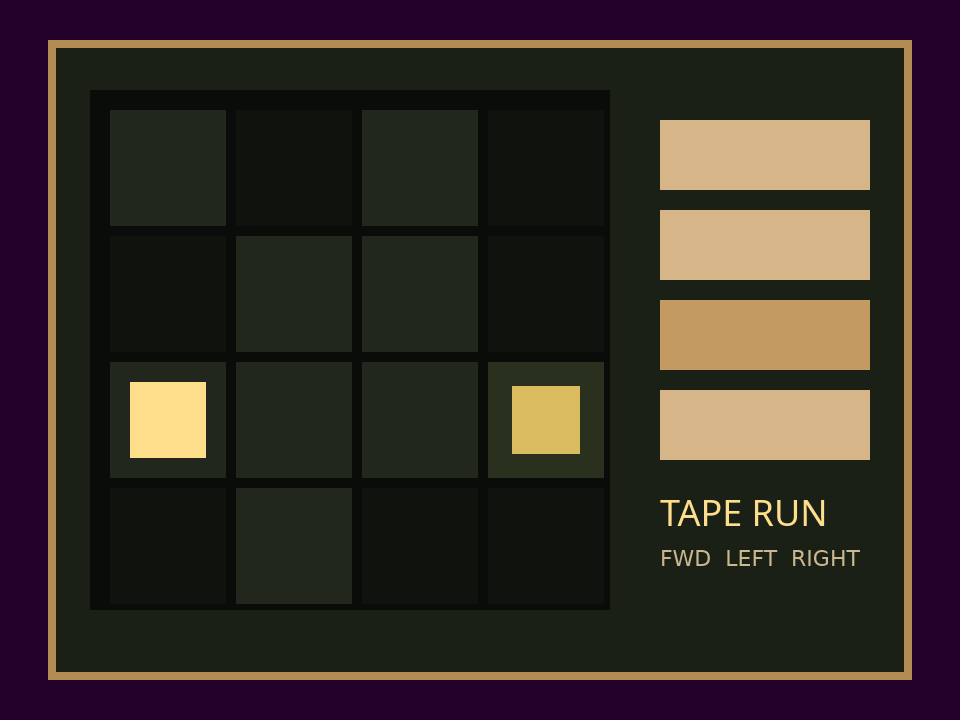
Tape Run Coding Game
Snap FWD, LEFT, and RIGHT blocks, press PLAY, and guide a neon courier to the exit.
How to Play
- 1Snap Motion blocks under the when PLAY hat to build a short script.
- 2FWD steps the courier forward. LEFT and RIGHT turn in place.
- 3Press PLAY to run the whole script, or STEP to walk one block at a time.
- 4Reach the glowing exit pad. If a block hits a wall, the courier resets gently so you can edit.
Tape Run is a short first coding cabinet: kids snap FWD, LEFT, and RIGHT blocks into a vertical script, then press PLAY to watch a neon courier follow that program to an exit pad. The skill is planning a tiny sequence and debugging it with STEP — not memorizing syntax.
About This Game
Tape Run is PlayingMind’s short first coding cabinet for kids. You snap Motion blocks — FWD, LEFT, and RIGHT — under a when PLAY hat, then press PLAY. A glowing chevron courier walks a small grid one instruction at a time until it reaches a glowing exit pad.
This is program-then-run, not follow-the-drawn-path. Kids build a vertical script that looks like puzzle pieces clicking together, then watch the courier execute it. PLAY runs the whole script. STEP walks one block at a time so debugging stays calm. If a block walks into a wall, the courier resets gently and that block shows a warning mark — no shame copy, just a clear place to edit.
Every live board comes from a generator plus a shortest-script solver. The game rejects boards that are already solved or that cannot be finished with FWD, LEFT, and RIGHT within the script-length cap. Difficulty grows with longer paths, more required turns, and a slowly rising cap. The UI uses an amber phosphor terminal look with kraft-paper blocks so the cabinet feels distinct from other PlayingMind games.
Two to five minutes is a comfortable session. Tape Run is an original under-13 introduction to sequencing — not Scratch, not Blockly, not Karel, and not a classroom worksheet. Play for the little plan before you press PLAY, then come back another day.
Tape Run Coding Game
Snap FWD, LEFT, and RIGHT blocks, press PLAY, and guide a neon courier to the exit.
What this game trains and how it helps
Tape Run is PlayingMind’s short first coding cabinet for kids. You snap Motion blocks — FWD, LEFT, and RIGHT — under a when PLAY hat, then press PLAY. A glowing chevron courier walks a small grid one instruction at a time until it reaches a glowing exit pad.
This is program-then-run, not follow-the-drawn-path. Kids build a vertical script that looks like puzzle pieces clicking together, then watch the courier execute it. PLAY runs the whole script. STEP walks one block at a time so debugging stays calm. If a block walks into a wall, the courier resets gently and that block shows a warning mark — no shame copy, just a clear place to edit.
Every live board comes from a generator plus a shortest-script solver. The game rejects boards that are already solved or that cannot be finished with FWD, LEFT, and RIGHT within the script-length cap. Difficulty grows with longer paths, more required turns, and a slowly rising cap. The UI uses an amber phosphor terminal look with kraft-paper blocks so the cabinet feels distinct from other PlayingMind games.
Two to five minutes is a comfortable session. Tape Run is an original under-13 introduction to sequencing — not Scratch, not Blockly, not Karel, and not a classroom worksheet. Play for the little plan before you press PLAY, then come back another day.
How to Play
- Snap Motion blocks under the when PLAY hat to build a short script.
- FWD steps the courier forward. LEFT and RIGHT turn in place.
- Press PLAY to run the whole script, or STEP to walk one block at a time.
- Reach the glowing exit pad. If a block hits a wall, the courier resets gently so you can edit.
Goal
Reach the glowing exit pad. A trial is correct when the courier lands on the exit after your script runs.
Who it's for
Kids under 13 and anyone who wants a gentle first coding game. No account needed.
More games like this
Every game on PlayingMind targets a specific cognitive skill. Adaptive difficulty means the game adjusts to your level automatically, starting accessible and increasing the challenge as you improve. Each session takes two to five minutes.