
Binary Bits — Binary Number Game
Read LED bits as decimals or pick the pattern for a target. Free, no signup.
How to Play
- 1Look at the amber LED row or the target number.
- 2Tap the matching decimal or bit pattern.
- 3Early levels use 4 bits; later levels grow to 6 and 8.
- 4Use the place-value weights under the lamps when you need a hint.
Binary Bits trains reading place values in base 2 — the same bit intuition used in coding, networking, and digital logic — in short no-account rounds.
About This Game
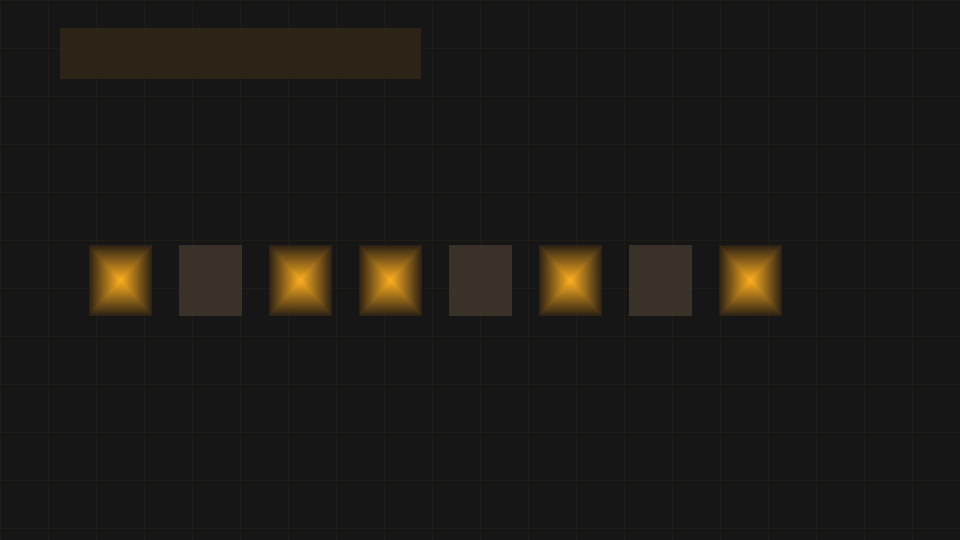
Binary Bits is a short computational-literacy cabinet. Amber LEDs show a bit row from MSB to LSB; place-value weights sit under each lamp so you can add powers of two without an IDE.
Half the rounds ask for the decimal of a lit pattern. The other half show a target number and four candidate bit rows. Levels grow from 4-bit (0–15) to 6-bit and 8-bit registers.
Two to five minutes is a comfortable dose. The game is for curious beginners and anyone refreshing base-2 place value — not a coding interview and not a promise of career results. Play for the click when 1011 becomes eleven, then come back another day.
Binary Bits — Binary Number Game
Read LED bits as decimals or pick the pattern for a target. Free, no signup.
What this game trains and how it helps
Binary Bits is a short computational-literacy cabinet. Amber LEDs show a bit row from MSB to LSB; place-value weights sit under each lamp so you can add powers of two without an IDE.
Half the rounds ask for the decimal of a lit pattern. The other half show a target number and four candidate bit rows. Levels grow from 4-bit (0–15) to 6-bit and 8-bit registers.
Two to five minutes is a comfortable dose. The game is for curious beginners and anyone refreshing base-2 place value — not a coding interview and not a promise of career results. Play for the click when 1011 becomes eleven, then come back another day.
How to Play
- Look at the amber LED row or the target number.
- Tap the matching decimal or bit pattern.
- Early levels use 4 bits; later levels grow to 6 and 8.
- Use the place-value weights under the lamps when you need a hint.
Goal
Match each amber LED row to its decimal value, or pick the bit pattern for the target number.
Who it's for
Kids and beginners learning binary, plus anyone who wants a quick CS warm-up. No account needed.
More games like this
Every game on PlayingMind targets a specific cognitive skill. Adaptive difficulty means the game adjusts to your level automatically, starting accessible and increasing the challenge as you improve. Each session takes two to five minutes.