
Practice Math, Memory & Logic. No Signup, No App.
Open a game and start practising in under 10 seconds. No account, no app, no setup — free on any device.
Top 20 games
Hand-picked across math, memory, logic, and more, use the links below to open the full catalog by category.
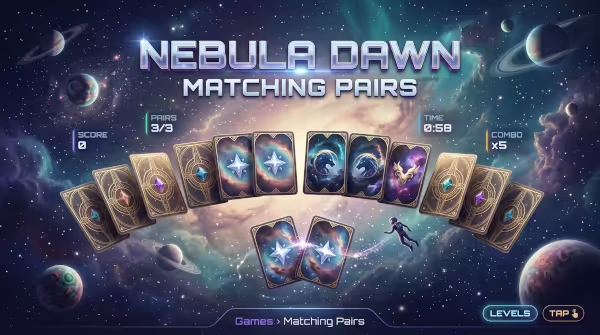
Matching Pairs
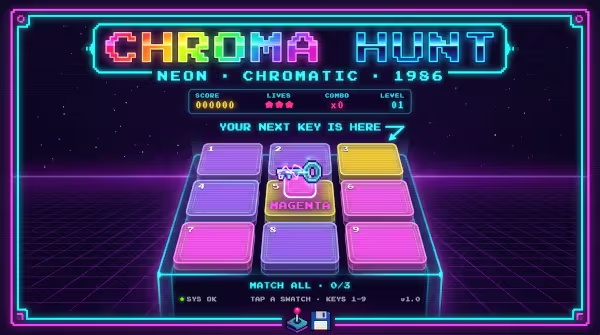
Colors
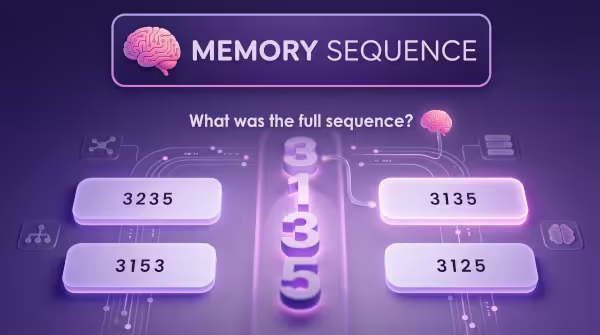
Memory Sequence
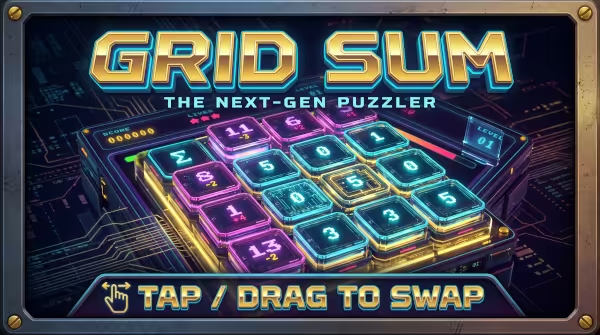
Grid Sum Puzzle
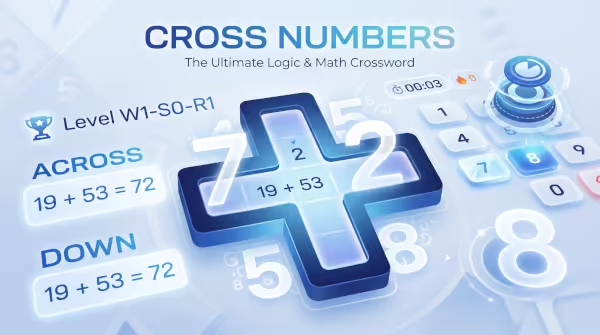
Cross Numbers
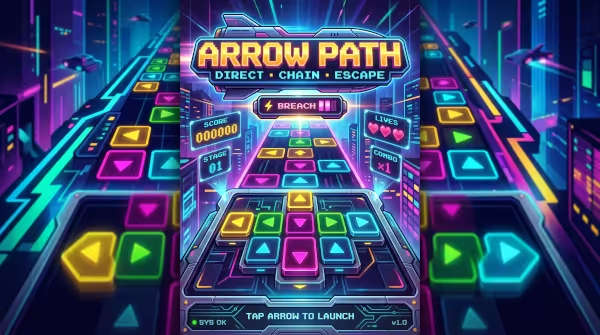
Arrow Path
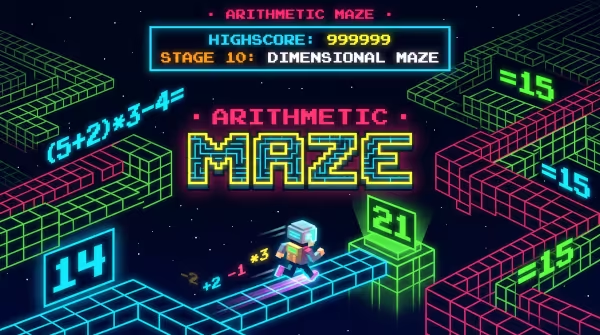
Arithmetic Maze
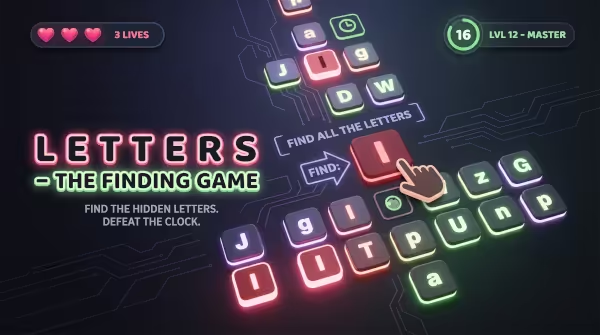
Letters
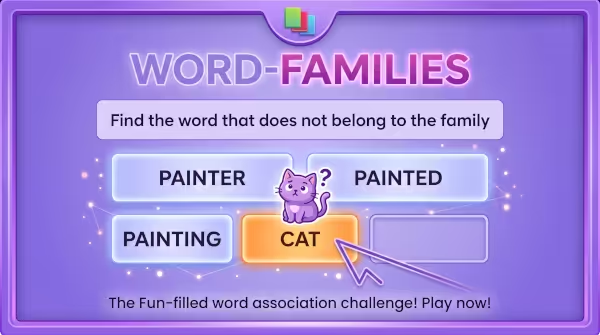
Word Families
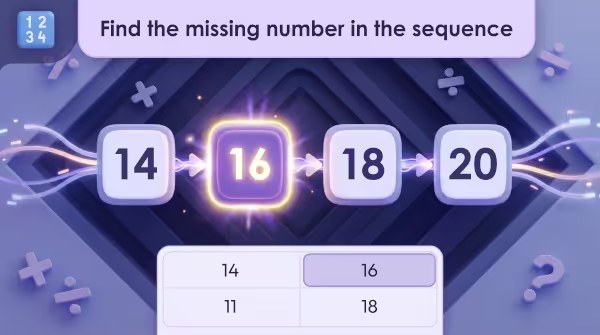
Number Sequence
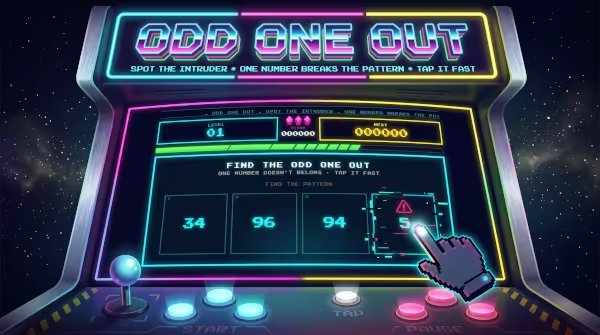
Odd One Out
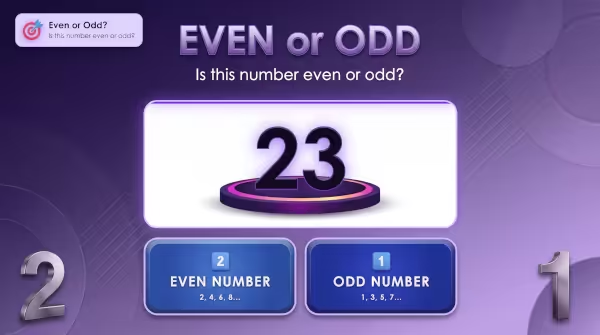
Even or Odd
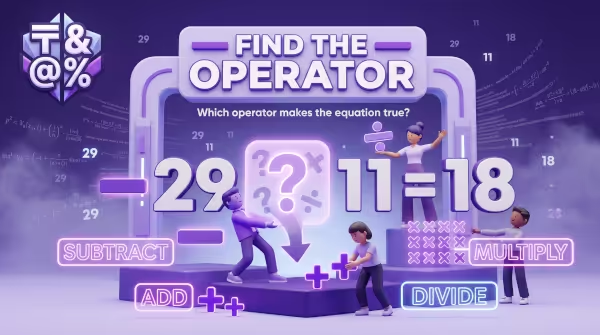
Find the Operator
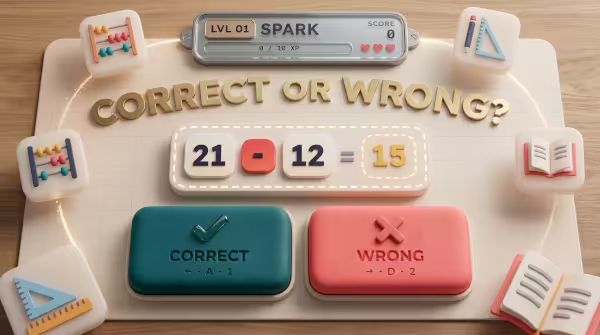
Correct or Wrong
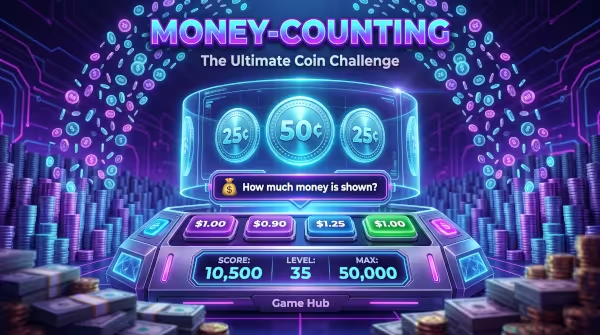
Money Counting
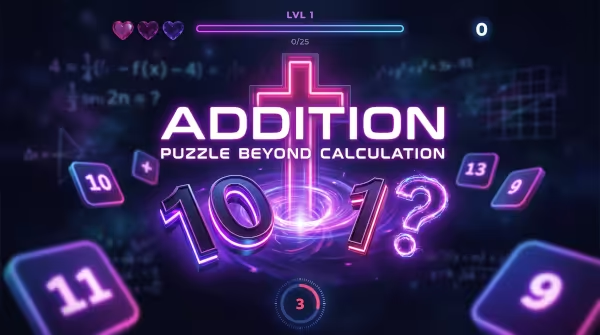
Addition Training
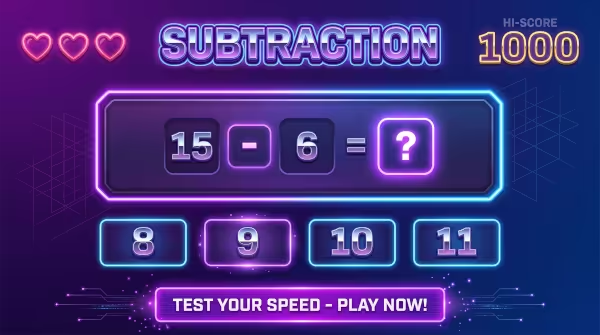
Subtraction Training
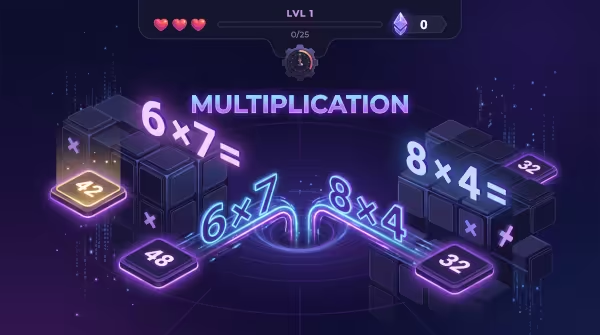
Multiplication Training
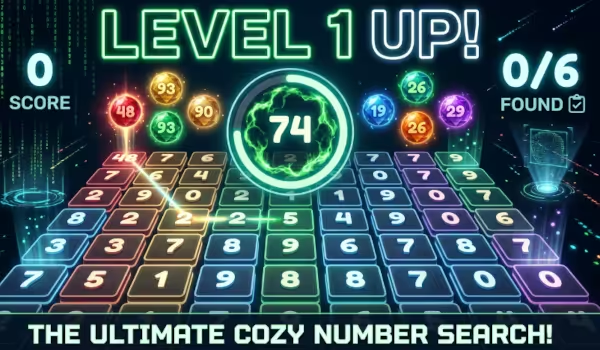
Number Soup
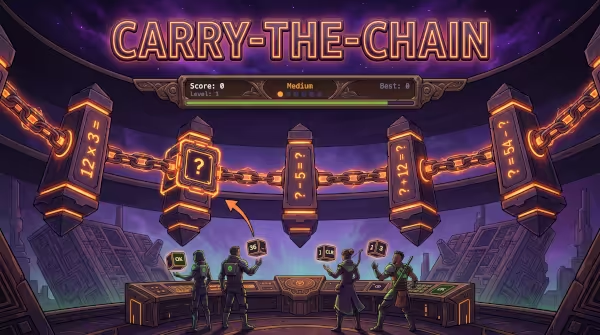
Carry the Chain: Fast Mental Math
What is PlayingMind?
PlayingMind is a free collection of practice games — each one targeting a specific skill, from times tables and mental arithmetic to working memory and pattern recognition. Difficulty adapts automatically as you improve.
Games take two to five minutes each, so you can fit a session into any break in your day. No downloads, no accounts, no subscriptions, just open the site, pick a game, and start.
Six categories cover the full range of cognitive skills: Math, Memory, Logic, Language, Visual, and Spatial. Mix game types across a session to get broader mental benefits than sticking to a single category.
What do you want to practise?
Math, memory, logic, language, and more — pick the skill you want to work on and open a game in seconds. No account, no setup.
Math
Math games train mental calculation, number sense, and arithmetic fluency. You solve addition, subtraction, multiplication, and operator problems in short rounds that build both accuracy and automaticity, the point where calculations feel effortless rather than effortful. This category suits school-age learners building number confidence, students preparing for tests, and adults who want to maintain sharp mental arithmetic without formal study.
View all games →Logic
Logic games develop analytical thinking, pattern recognition, and structured problem-solving. You identify rules, spot exceptions, and work through constraints, the same cognitive processes used in coding, planning, and critical reasoning. These games reward a methodical approach: players who slow down to understand the underlying rule before acting consistently outperform those who guess. This category is ideal for anyone who enjoys puzzles and wants to sharpen their ability to reason clearly under pressure.
View all games →Memory
Memory games directly train working memory, the brain's mental workspace used for holding and manipulating information in real time. You memorise sequences, recall card positions, and reproduce patterns under increasing load. Working memory capacity is one of the strongest predictors of learning performance and correlates with focus, reading comprehension, and the ability to follow complex instructions. Short, regular sessions in this category produce benefits that extend well beyond the games themselves.
View all games →Language
Language games strengthen vocabulary, alphabetical reasoning, and word pattern recognition. You hunt for letters in grids, group words by family, and compare alphabetical positions, all activities that reinforce the mental connections between written symbols and meaning. This category is particularly valuable for early readers building decoding skills, learners expanding vocabulary, and adults who want faster, more fluent access to language in speech and writing.
View all games →Visual
Visual games train colour perception, pattern matching, and visual attention, the ability to notice what matters and ignore what doesn't. You identify target colours under time pressure and match visual stimuli rapidly. Some modes introduce Stroop-like interference (where the colour of a word conflicts with its meaning), which specifically trains selective attention and cognitive control. This category benefits anyone who wants sharper visual awareness and faster perceptual processing.
View all games →Frequently Asked Questions
Are the games really free?
Yes. The site is supported by ads, so the games stay free. Just pick one and play. You don't need an account, and there's nothing to download or pay for.
What kinds of games are available?
There are over 25 practice games across six areas: math, memory, logic, language, visual, and spatial. That covers things like times tables, working memory sequences, pattern recognition, vocabulary, and number puzzles.
Do I need to sign up or install anything?
No. There's nothing to install and you don't have to share any personal info. The games run in any modern browser, whether you're on a phone, tablet, or computer.
How often should I play to see results?
Short, regular sessions tend to work better than long ones once in a while. Five or ten minutes a day, with two or three games, is plenty. After a couple of weeks of playing most days, you'll usually notice you're a bit faster and make fewer mistakes.
Popular guides
Hand-picked indexed articles on practice, memory research, and using the site.